Faculty
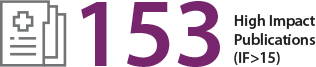
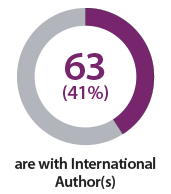
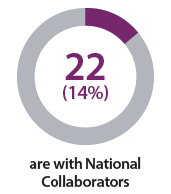
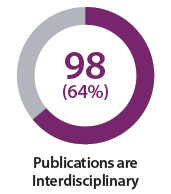
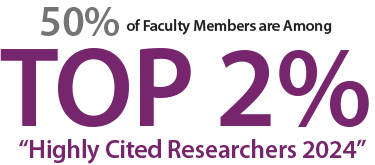
Impact ReportResearch &20 24InnovationIn 2024, CU Medicine solidified its position at the forefront of scientific advancement by undertaking 475 projects, with 153 published in high-impact journals and 18% involving international collaborations, while half of its faculty rank among the top 2% of highly-cited researchers. This commitment to groundbreaking research enables novel disease prevention and treatments, improving human health globally. Beyond academic excellence, the institution demonstrates a steadfast dedication to maximizing real-world impact through robust knowledge transfer, uniting cutting-edge faculty research with industry stakeholders within a successful translational framework to convert professional knowledge into practical applications that benefit patients locally, nationally, and worldwide.Faculty Impact Report
In the current era of AI, advances in big data analytics impact many aspects of our daily lives – including
chronic disease management. CU Medicine’s Diabetes and Endocrine Research Group is leading a
transformative project that aims to deliver major changes to advance diabetes prevention and care. Entitled
“Using Data to Transform Diabetes Care and Patient Lives”, the project has been granted over HK$80 million
in funding in the 12th round of the University Grants Committee Areas of Excellence Scheme.
Over 10% of the population of Hong Kong are affected by diabetes. Globally, more than 580 million people
live with this chronic disease, which can pose significant health risks. Furthermore, around one in every six
pregnant women report abnormal blood glucose levels during pregnancy, and this can have significant
health implications for the women and the next generation. This is of particular concern given more and
more young people are now being diagnosed with diabetes in early adulthood.
Given these challenges posed by diabetes, the group has made major contributions to tackle the diabetes
in Asia, including unravelling the unique characteristics of Asian patients with diabetes, the identification of
Chinese-relevant genetic markers for diabetes and its complications, and invented the web-based Joint
Asia Diabetes Evaluation (JADE®) program, using proprietary technology to stratify risk of diabetes,
empower patients’ self-management and promote doctor-patient communication.
Building on these foundations, and focusing on several knowledge and implementation gaps identified in
the recent Lancet commissioned report on Diabetes, this new project aims to use data-driven approaches
to transform diabetes care. Firstly, it aims to establish a multi-centre Hong Kong Gestational Diabetes
Register and conduct a three-year intervention trial, incorporating wearables and other technologies, to
prevent diabetes in high risk women and improve the health of future generations. Secondly, the team will
implement a multi-component psychosocial-behavioural intervention to improve care for young people
with diabetes and obesity. Thirdly, the project team will utilise territory-wide big data to evaluate clinical
outcomes of newer glucose-lowering agents in real-world scenarios and to guide future treatment
selection. Finally, it aims to develop an educational platform and regional network of collaborating centres
to share best practices with global partners.
Recognised as an International Diabetes Federation Centre of Excellence, the CU Medicine team will
integrate innovative biomedicine, translational research, and health education to advance diabetes care,
improving the lives of people with or at risk of diabetes, and positioning Hong Kong as a global leader in the
field of diabetes and non-communicable diseases.
02
The Science of
Precision
Precision medicine is widely recognised for being more effective and safe for specific patients. CU Medicine’s Prof. Brigette Ma is
taking it to the next level to improve treatment paradigms and prognosis for nasopharyngeal cancer (NPC).
Over the past two decades, CU Medicine’s team has been at the forefront of NPC treatment development. The 2002 report showed the effectiveness of concurrent chemoradiotherapy for stage III-IVa NPC, indicating a significant 20% improvement in
survival rate. Since then, the treatment method has become standard for leading global professional bodies such as American Society of Clinical Oncology (ASCO), Chinese Society of Clinical Oncology (CSCO), and the European Society of Medical
Oncology (ESMO). Prof. Ma is turning the new focus to “Precision Immunotherapy,” deciphering the tumour microenvironment (TME) of NPC, and
then translating this clinically into new therapeutic approaches and biomarkers. Following international and transdisciplinary
collaboration with researchers from the U.S. and Singapore, the team has developed new drug combinations and become the
first group to evaluate dual targeting of anti-PD1 and LAG3 immunotherapy in recurrent or metastatic NPC (R/M NPC) in a
multinational phase III trial with nasopharyngeal oncology. Furthermore, the team has completed an in-house phase II study of
avelumab (anti-PDL1 immunotherapy) and axitinib (anti-VEGFR inhibitor), while collaborating with data scientists from South
Korea and Singapore to evaluate an AI-driven pathology platform to predict survival following immunotherapy.
As the team is engaged in multiple projects, the overarching goal is to improve the progression-free survival (PFS) of patients with
R/M NPC undergoing first-line chemotherapy-immunotherapy. The potential magnitude of benefit is estimated to increase the
one-year PFS from 40% to 52.6%. It is also expected to provide significant survival benefits and cost-effectiveness compared to
chemotherapy alone. Through advanced methodologies, global education, and innovative therapies, Hong Kong’s contributions are shaping a
brighter future for nasopharyngeal cancer care, significantly prolonging patient survival and enhancing quality of life.
02
03
Managing Myopia –
Without the Glasses
It is common to see Hong Kong children wearing glasses. Childhood myopia is a prevalent condition in the city, ranking highest globally in severity and prevalence. The Hong Kong Children Eye Study, initiated by CU Medicine in 2015, has reached out to 50,000 children aged between six and eight, along
with their parents, and identified significant lifestyle and genetic factors affecting myopia progression.
In pursuit of prevention strategies, the research team conducted the Low-concentration Atropine for Myopia Progression (LAMP1) study in 2018. It is
the world’s first randomised placebo-controlled trial of low-concentration atropine eye drops for myopia treatment, involving 438 Chinese children in
Hong Kong. The findings indicated that 0.05%, 0.025%, and 0.01% atropine eye drops are effective in slowing myopia progression with negligible side
effects, whilst the 0.05% atropine is the optimal treatment, reducing progression by 67% without adverse effects.
Building on these results, the LAMP2 study published in JAMA in 2023 demonstrated that 0.05% atropine can prevent the onset of myopia in children
by 47% without significant adverse effects. This discovery presents a novel intervention for preventing myopia, earning praises from the Chinese
Academy of Medical Sciences and being selected as China’s Important Medical Advancements in 2023. Furthermore, Prof. Jason Yam received the
National Science Fund for Distinguished Young Scholars and has been elected to Hong Kong Young Academy of Sciences in acknowledgement of his
work.
The Hong Kong Children Eye Study reached out to low-income families and children with special education needs (SEN). The team provided more than
450 children eye care education workshops at schools. The initiative involved more than 120 eye doctors, 20 nurses and optometrists, 520 medical
students, 170 nursing students, 5,300 secondary school students, and 1,300 volunteer workers.
The commercial sector also collaborated in the production of the eye drops. A start-up enterprise involving Prof. Yam, OCUS Innovation (HK), has
obtained support from Hong Kong Government and has been admitted to the Hong Kong Science and Technology Parks Incubation Programme.
At the heart of CU Medicine’s mission is not only the relentless pursuit of academic excellence and scientific discovery, but also a strong commitment to maximising the positive impact of our work through knowledge transfer and entrepreneurship. Our team of gastroenterologists has demonstrated how transforming expert knowledge into tangible solutions delivers meaningful benefits. Their approach brings about real change for patients on local, national, and global scales, reinforcing our belief that true value arises when professional expertise is converted into solutions that address real-world healthcare challenges.
The Beginning of a Magical Journey
This transformative journey began with a brainstorming session between Professor Francis Chan, Choh-Ming Li Professor of Medicine and Therapeutics,
and Professor Siew Ng, Associate Dean (Research) of CU Medicine and Croucher Professor of Medical Sciences. Their initial ideas, first sketched on a
napkin at a local café, envisioned personalised treatments and analytics based on the gut microbiome.
By late 2019, Professor Chan and Professor Ng established a CUHK biotechnology spin-off, GenieBiome. The GenieBiome Molecular and Microbiome
Laboratory now provides novel gut-microbe diagnostics such as a stool-sample test for the early detection of colon cancer. The test offers a
non-invasive and more affordable alternative to traditional colonoscopy, significantly improving opportunities for timely treatment.
MOMmy Cohort: Exploring the Mother–Baby Microbiome Connection
Set up to investigate the influence of gut microbiota in pregnant mothers and babies’ lifelong health, the MOMmy (short for MOther-infant Microbiota transMission and its link to long term health of babY) cohort study in 2019 revealed that mothers with gestational diabetes mellitus (GDM) have distinct microbiome roles during pregnancy, which leave lasting “fingerprints” on their infants’ gut microbiome for up to a year. These are associated with neurodevelopmental changes, such as a larger head circumference, potentially indicating early neurodevelopmental disorders. Professor Zhang Lin, Assistant Professor of the Department of Anaesthesia and Intensive Care, and Professor Siew Ng’s team used metagenomic sequencing to identify reduced microbial diversity and increased abundance of certain pathogenic species in GDM mothers and their infants.
The MOMmy project follows babies for up to seven years, collecting comprehensive data and biological samples to understand microbiome
development. Focusing on Asian populations, the long-term goal is to establish representative birth cohorts in China to enable early screening and interventions for common infant diseases using microbiome analysis.
Gut Microbiome and Autism Spectrum Disorder (ASD)
Another CUHK spin-off, MicroSigX, was launched to focus on developing innovative non-invasive diagnostic solutions. CU Medicine published
groundbreaking research in Nature Microbiology identifying significant changes across four kingdoms of microbial species (archaea, bacteria, fungi,
viruses) in the gut microbiome of children with ASD. Leveraging machine learning, the team developed MSX Metagenie® — the world’s first AI-powered multikingdom microbial biomarker technology. This novel technology received the FDA Breakthrough Device Designation and would be launched
commercially by MicroSigX in Hong Kong in late 2025, followed by planned expansion to Chinese Mainland and the United States.
In parallel, a pilot clinical study evaluated SCM06, a gut microbiome modulator designed to boost y-Aminobutyric acid (GABA), a neurotransmitter often
depleted in ASD. Over 12 weeks, 30 children with ASD experienced a 15-20% reduction in sensory and anxiety symptoms, suggesting that microbiome
modulation may offer a safe and effective therapeutic option. SCM06 has been successfully commercialised by GenieBiome.
Impact of Disinfection Practices on Allergy and Eczema
During the pandemic, a CU Medicine study found a 46% rise in toddler allergies in Hong Kong, linked to diminished beneficial gut bacteria caused by vigorous disinfection practices. This research underscores the significance of the “gut-skin axis,” the interplay of gut microbes and skin health. Excessive hygiene and antibiotic overuse limit beneficial bacteria, disrupting immune development and further upsetting microbial imbalance.
To address eczema, CU Medicine developed two oral live microbiome formulas – SIM03 for children and SIM05 for adults – utilising microencapsulation to promote gut colonisation. Pilot studies indicated improvements in eczema severity, quality of life, and sleep, alongside increases in beneficial gut bacteria. These results were published in Scientific Reports.
Entrepreneurship and Global Vision
Through research and commercialisation, CU Medicine demonstrates a commitment to innovation that serves society. Professor Chan emphasises that commercialisation should not focus on profit but rather transform life-changing ideas into marketable solutions. This approach attracts international
investment and extends Hong Kong’s impact to the Greater Bay Area, Southeast Asia, and beyond.